

Windows 11’s power saving mode will become more adaptive
17.07.25 21
21
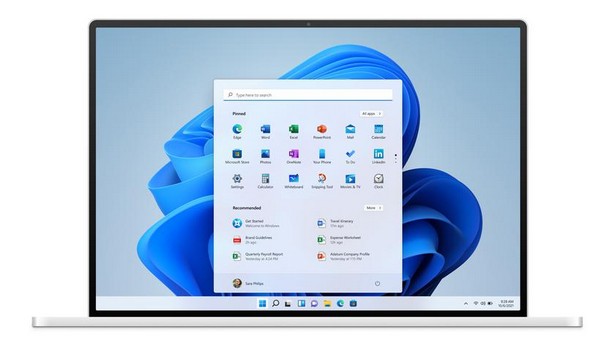
Previously, power saving in Windows 11 worked according to a simple scheme: when the battery charge fell below a certain threshold — for example, to 20% — the system automatically reduced the screen brightness, reduced the load on the processor, disabled visual effects and limited background activity. All this was done to continue working on battery power.
Now Microsoft has changed its approach. In test builds of Windows 11 a few weeks ago, enthusiasts noticed a new “adaptive” power saving mode, but it worked unstable. With the release of Windows 11 Canary build 27898, the feature first became available for preview on laptops and tablets.
Unlike the previous method, adaptive mode takes into account not only the charge level, but also other parameters — current power consumption, system load and network connection. That is, power saving can be turned on even at a high charge level, if the system considers it appropriate. At the same time, the screen brightness is not reduced, which can be important for ease of use.
Not by default
As noted in the official build notes, adaptive mode is not yet enabled by default. The user needs to activate it manually in the Settings > System > Power & battery section. However, Microsoft is already experimenting with automatically enabling this feature for individual members of the Windows Insider program. It can also be disabled manually.
The appearance of adaptive power saving coincides with a wave of criticism of Windows 11 for inefficient use of resources and poor optimization for portable devices, including game consoles. In response to these remarks, Microsoft announced a simplified version of Windows 11, focused on mobile gaming platforms.
The new feature may extend the autonomy of laptops and tablets, but in the long term it is also a step towards more flexible resource management, depending on the specific usage scenario.
Don't miss interesting news
Subscribe to our channels and read announcements of high-tech news, tes

Samsung Galaxy Fold7: not a smartphone, not a tablet, something more
 0
0 
Samsung Galaxy Fold series of smartphones is notable for its folding design and large display. The new generation model had an even larger screen, advanced cameras, stronger hardware and improved ergonomics.
NVIDIA Blackwell – architecture with new capabilities for AI and content creation
0 
NVIDIA technologies that were previously only available to owners of professional graphics cards are now open to ordinary users. Let’s talk about the capabilities of the Blackwell architecture in the field of artificial intelligence and content creation.
Garmin Instinct Crossover – hybrid smartwatch costs $600 with AMOLED screen, flashlight and sapphire glass smart watches

Garmin Instinct Crossover has a 1.2-inch AMOLED display with RevoDrive analog hands covered with Super-LumiNova luminescent compound.
New EcoFlow with 288 Wh capacity weigh less than 3 kilograms accumulator

EcoFlow has introduced a new line of portable charging stations in Europe, the Trail series. This device has already been on sale in the US