

Google DeepMind can translate ancient texts thanks to new Aeneas model
27.07.25 62
62
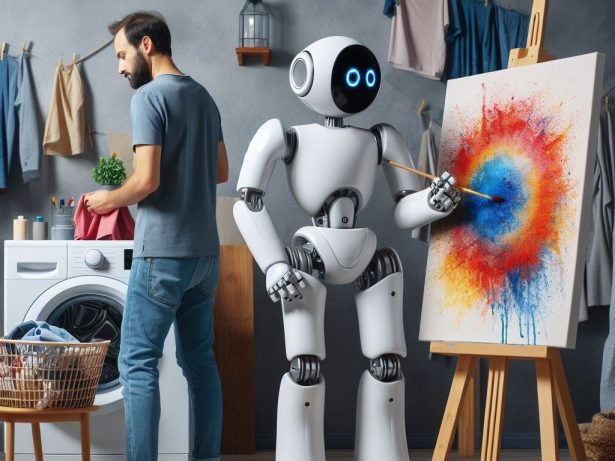
In ancient Rome, writing was everywhere, from imperial monuments to everyday objects. But only fragments have survived to this day: many texts have been damaged by time or deliberately destroyed. To help historians reconstruct them, the Google DeepMind team developed Aeneas, an open AI model that can reconstruct Latin inscriptions, determine their age and likely place of origin.
Aeneas works not only with text, but also with context — which is critical in epigraphy. Historians usually look for parallels manually: comparing wording, grammatical constructions and typical phrases to roughly date and interpret a find. Aeneas does this automatically, processing tens of thousands of Latin texts in seconds.
The development was carried out in collaboration with the University of Nottingham with the participation of researchers from Oxford, Warwick and Athens. The model is trained on a specially created dataset LED (Latin Epigraphic Dataset), which includes more than 176,000 inscriptions collected and organized by historians over the decades. The inscriptions are cleaned, unified and provided with metadata: place of discovery, estimated date and context.
Technically, Aeneas uses a transformer architecture. One module analyzes the text, others restore lost symbols and calculate time and geographical parameters. Images indicating the physical origin of the artifact can be used as additional input.
In addition to reconstruction, the model offers a list of the most similar inscriptions – a kind of “contextual affinity”. The system creates a “vector profile” of the text, which takes into account the theme, style, period, origin and similarity with other sources.
The tool is now available online for historians, teachers, students, and museum professionals at predictingthepast.com.
According to the developers, Aeneas shows advanced results and could become a new standard in digital epigraphy, and in the future, adapt to other ancient languages and media, from papyri to coins.
Don't miss interesting news
Subscribe to our channels and read announcements of high-tech news, tes

Samsung Galaxy Fold7: not a smartphone, not a tablet, something more
 0
0 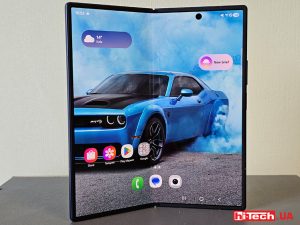
Samsung Galaxy Fold series of smartphones is notable for its folding design and large display. The new generation model had an even larger screen, advanced cameras, stronger hardware and improved ergonomics.
NVIDIA Blackwell – architecture with new capabilities for AI and content creation
0 
NVIDIA technologies that were previously only available to owners of professional graphics cards are now open to ordinary users. Let’s talk about the capabilities of the Blackwell architecture in the field of artificial intelligence and content creation.
Garmin Instinct Crossover – hybrid smartwatch costs $600 with AMOLED screen, flashlight and sapphire glass smart watches

Garmin Instinct Crossover has a 1.2-inch AMOLED display with RevoDrive analog hands covered with Super-LumiNova luminescent compound.
New EcoFlow with 288 Wh capacity weigh less than 3 kilograms accumulator

EcoFlow has introduced a new line of portable charging stations in Europe, the Trail series. This device has already been on sale in the US