

Google creates Willow quantum chip. Calculations take 5 minutes instead of 10 septillion years
12.12.24 211
211
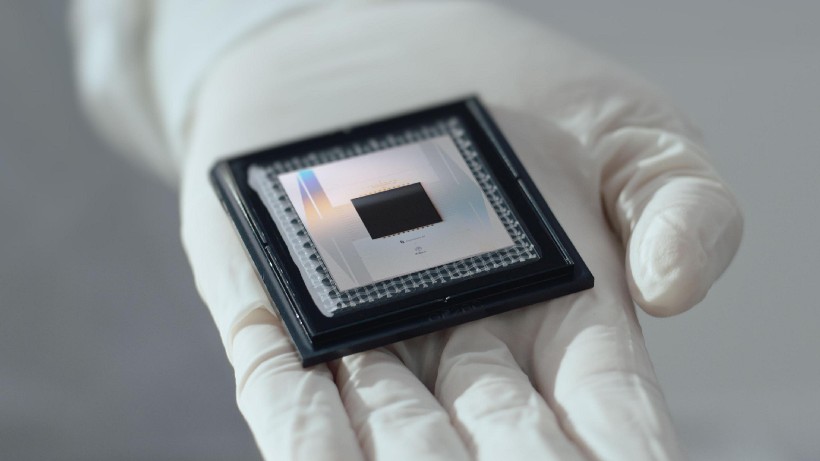
Google’s quantum computing lab has taken a major step forward, unveiling a chip called Willow that can solve the world’s most complex computational problems in a record 5 minutes. According to Google, it would take one of the world’s most powerful supercomputers 10 septillion years to complete a similar task, which is significantly older than the age of the universe.
Performance Breakthrough
Willow is a significant improvement over Google’s previous quantum processor, which in 2019 showed an advantage over classical computers. At the time, Google said its chip could solve a calculation in 3 minutes, while the supercomputer would have taken 10,000 years. However, this statement has sparked controversy, including from IBM.
Solving the Error Problem
One of the main problems with quantum computing remains errors caused by the interaction of qubits with their environment. Qubits, unlike classical bits, can be in multiple states at once, making them extremely sensitive to external influences. Google has addressed this problem by adding more qubits to the system and implementing real-time error correction methods.
Hartmut Neven, founder of Google Quantum AI, said the team has reached “below the threshold” — the level at which errors decrease as the number of qubits increases. The breakthrough is key to advancing quantum error correction, a concept first proposed by Peter Shore in 1995.
Technical specifications
The Willow chip has 105 qubits and has “best-in-class performance.” Google’s competitors, such as Microsoft, Amazon and IBM, are also actively developing their own quantum systems, but Willow already shows a significant advantage.
Google’s next goal is to perform the first “useful, non-classical” calculation that cannot be performed on traditional computers and that will have real practical applications. In the future, quantum technologies could change the approach to data collection for AI, accelerate the development of new drugs, improve battery technology for electric cars and advance research in the field of fusion energy. The quantum revolution promises to be a catalyst for innovation in various fields of science and technology.
Don't miss interesting news
Subscribe to our channels and read announcements of high-tech news, tes

Samsung Galaxy Fold7: not a smartphone, not a tablet, something more
 0
0 
Samsung Galaxy Fold series of smartphones is notable for its folding design and large display. The new generation model had an even larger screen, advanced cameras, stronger hardware and improved ergonomics.
NVIDIA Blackwell – architecture with new capabilities for AI and content creation
0 
NVIDIA technologies that were previously only available to owners of professional graphics cards are now open to ordinary users. Let’s talk about the capabilities of the Blackwell architecture in the field of artificial intelligence and content creation.
Garmin Instinct Crossover – hybrid smartwatch costs $600 with AMOLED screen, flashlight and sapphire glass smart watches

Garmin Instinct Crossover has a 1.2-inch AMOLED display with RevoDrive analog hands covered with Super-LumiNova luminescent compound.
New EcoFlow with 288 Wh capacity weigh less than 3 kilograms accumulator

EcoFlow has introduced a new line of portable charging stations in Europe, the Trail series. This device has already been on sale in the US