

Galvin SCR-536: the harsh ancestor of the mobile phone
30.03.15 12,157
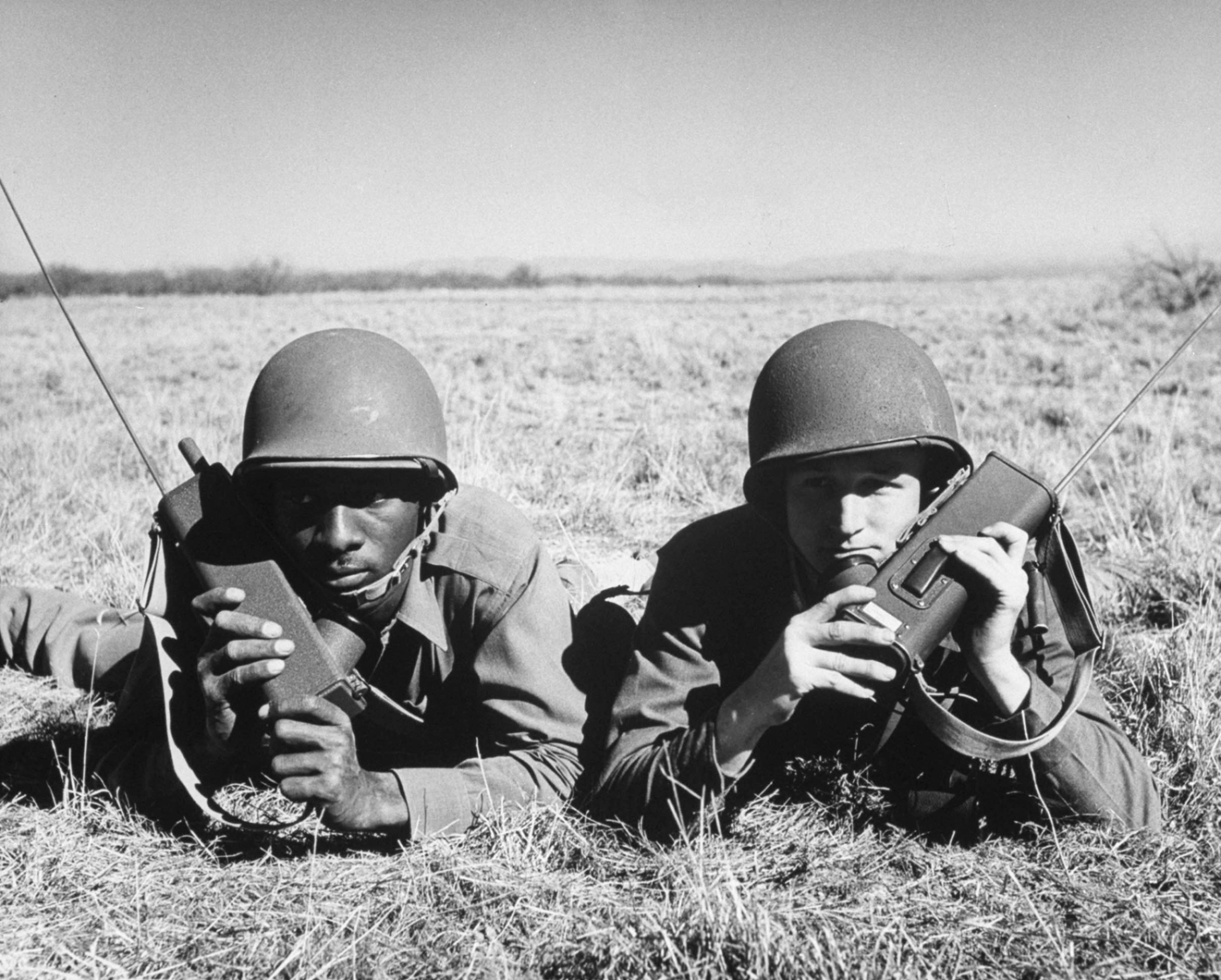
To provide reliable communications to the US Army in World War II, engineers at Galvin Manufacturing (the future Motorola) created a truly mobile walkie-talkie. From there, the development of technology led to mobile communications.
Less is better
It all started in 1928, when brothers Paul and Joseph Galvin bought a failing AC rectifier business and formed the Galvin Manufacturing Corporation. The company first produced rectifiers for radios, and in 1930 introduced the first compact and inexpensive car radio under the Motorola brand. The name was a combination of the word “motor” and the suffix “-ola”, which was used for equipment related to sound. The receivers became very popular, and the company’s business skyrocketed.
In 1936, Paul Galvin was on vacation with his family in Europe and could not help but notice the comprehensive build-up of military power in Germany. He returned confident that the time had come to study the radio communications needs of the armed forces. At the same time, Galvin Manufacturing began to develop two-way radio communications and in 1939 released a radio station that allowed both receiving and transmitting information.
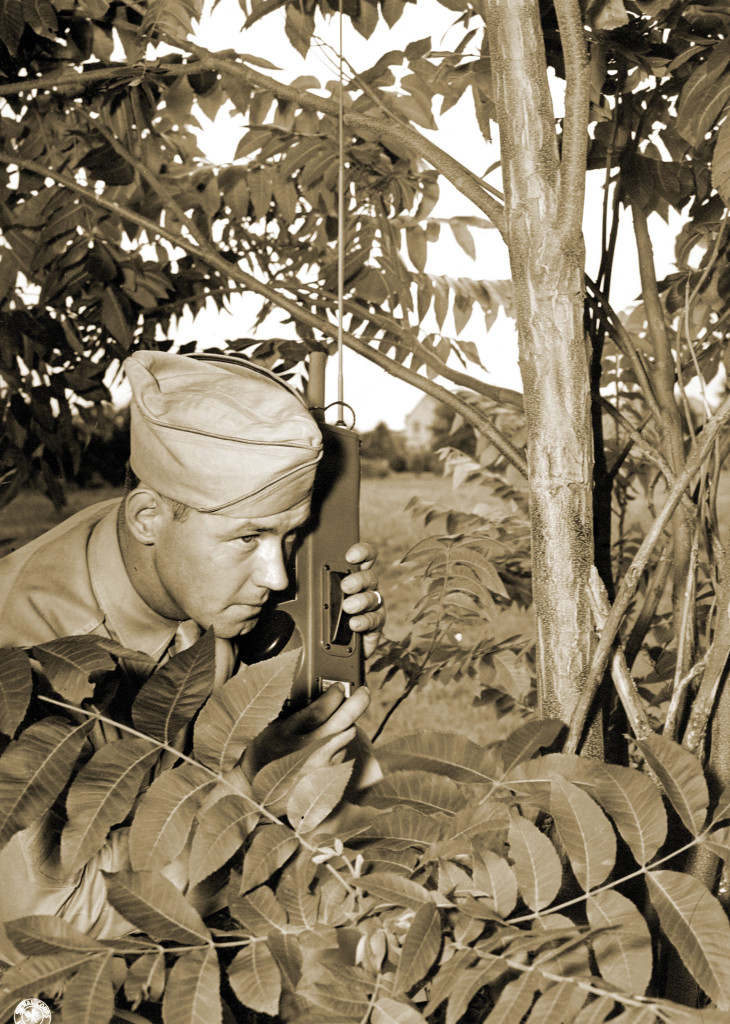
Engineers foresaw that portable radios would be just as necessary as large “long-range” ones.
In 1940, the company received an order from the government to produce army communications equipment. Galvin Manufacturing engineers understood that they should not invent another large and heavy radio box, but rather try to fit existing technologies into a small package. Chief Engineer Donald Mitchell came to this conclusion while observing a National Guard exercise. He saw heavy radio equipment being thrown into the mud in the confusion of the battle. This completely convinced him that the most compact and lightweight means of communication would be much more effective in battle.
And in the same 1940, the company introduced a portable two-way radio station SCR-536 (SCR – Signal Corps Radio; Signal Corps – US Army Signal Corps) for operation over short distances. At first, the army leadership was not impressed with the radio: they did not see the need for such devices due to their short operating range. There they were accustomed to heavy portable “long-range” stations, the kind that were transported in jeeps, and considered them more effective, and portable radios were too small and weak for combat.
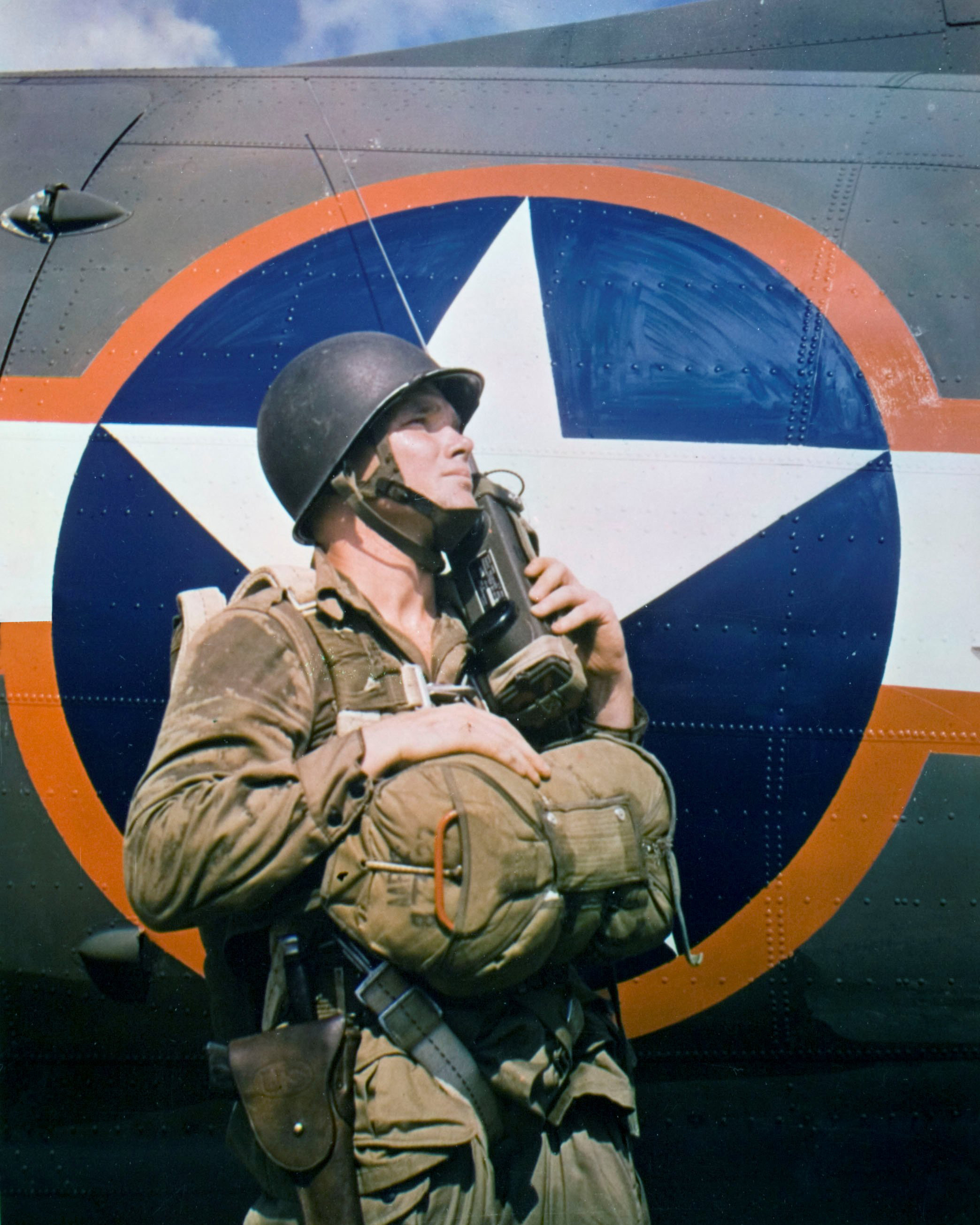
Things began to change for the better when President Roosevelt saw security personnel operating Galvin radios during his 1940 inauguration. He wrote to military officials that they should consider using hand-held radios in the military, especially for paratroopers who had to carry all their equipment during parachute jumps. And in 1941, a contract was signed with Galvin Manufacturing to supply the SCR-536 to the US Army.
One hand is enough
The main features of the SCR-536 radio were its light weight (2.3 kg with batteries) and its size slightly larger than a telephone handset. It worked on the latest miniature radio tubes at that time, and could be controlled with one hand by pressing and releasing a button on the body. In 1941, the radio station began to be supplied to the troops and became one of the main means of communication for infantry and landing forces. By the end of the war in 1945, 130 thousand copies were produced.
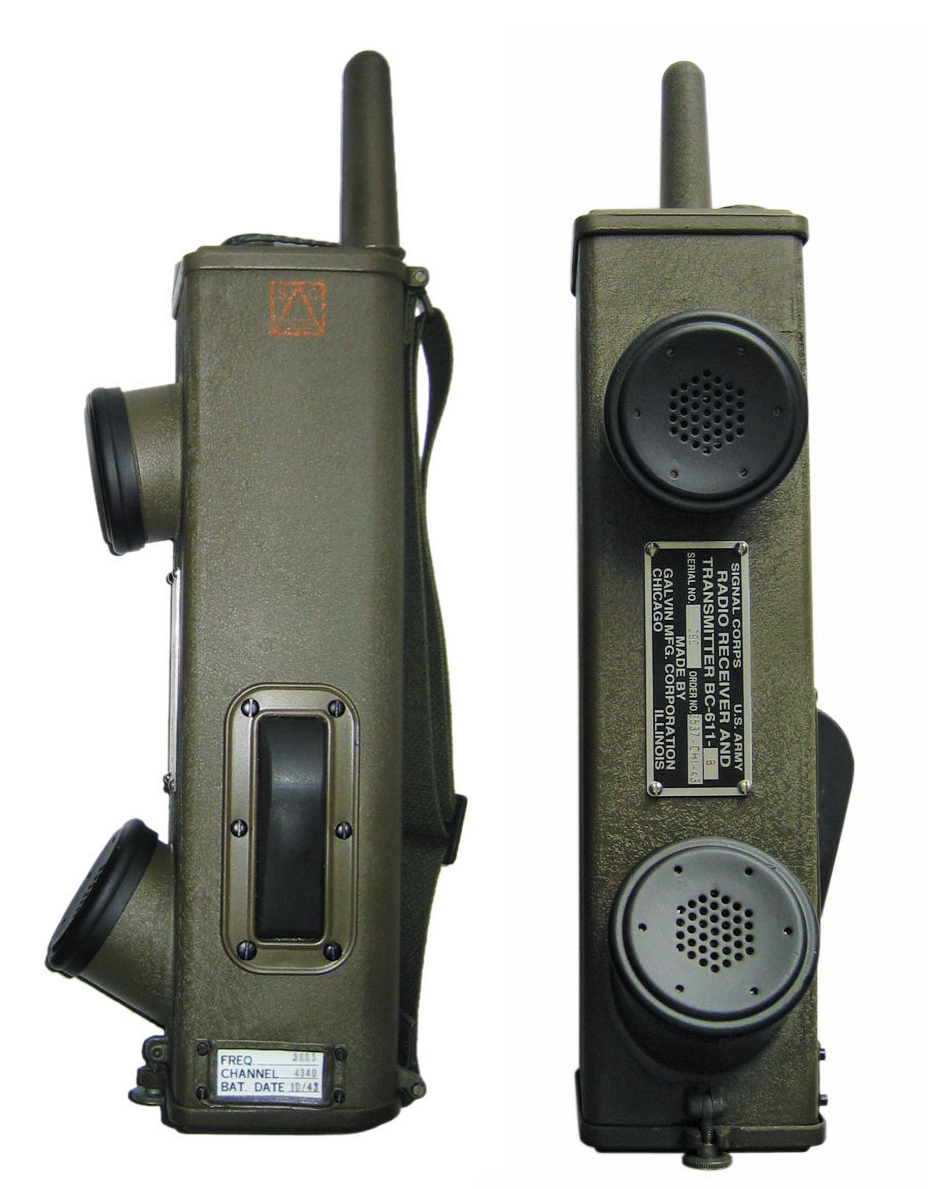
The SCR-536 kit consisted of the BC-611 transceiver and accessories. The radio operated on one of 50 channels within the frequency range of 3.5–6.0 MHz. The radio operator himself could not change the frequency – it was preset at the factory, or it could be changed by maintenance personnel by replacing individual parts. Range is up to 1.6 km above the ground or up to 4.8 km over the ocean. The distance and power are not the greatest, but this was not intended for such a small device.
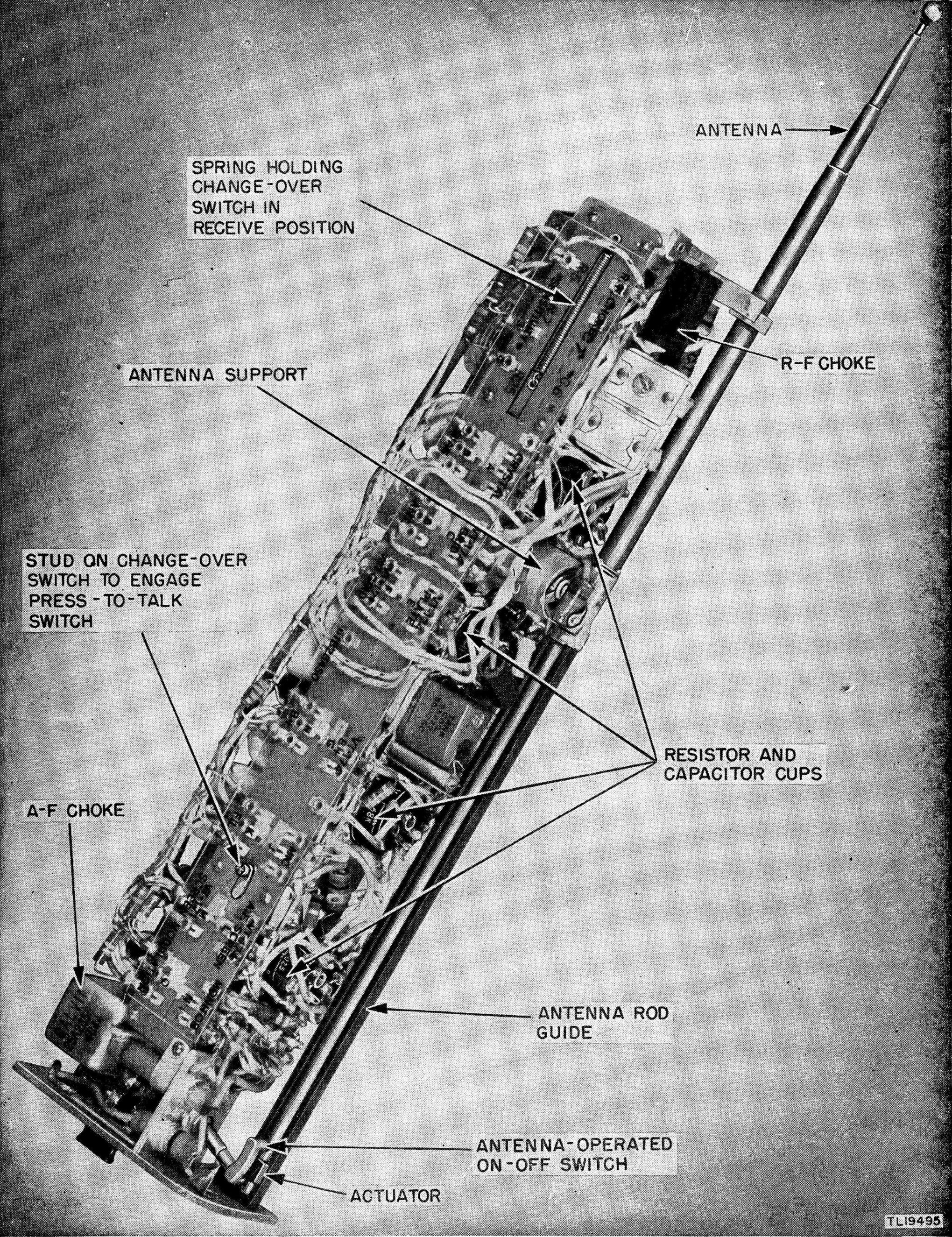
The hardware unit is very compact
The radio body measuring 400x137x92 mm was made of extruded (die-cast for greater strength) aluminum. Inside there were two narrow and long compartments: hardware and battery. The hardware unit included several hundred parts, the main ones of which were five radio tubes, two quartz resonators for reception and transmission, an antenna coil and a resonant coil. To repair or change the frequency, signalmen used a BX-49 box with sets of parts. Power was provided by two batteries: VA-37 (1.5 V) and VA-38 (103.5 V). Instead of the VA-37, it was possible to use smaller VA-30 batteries using special adapters. The charge was enough for 12–15 hours of continuous operation.
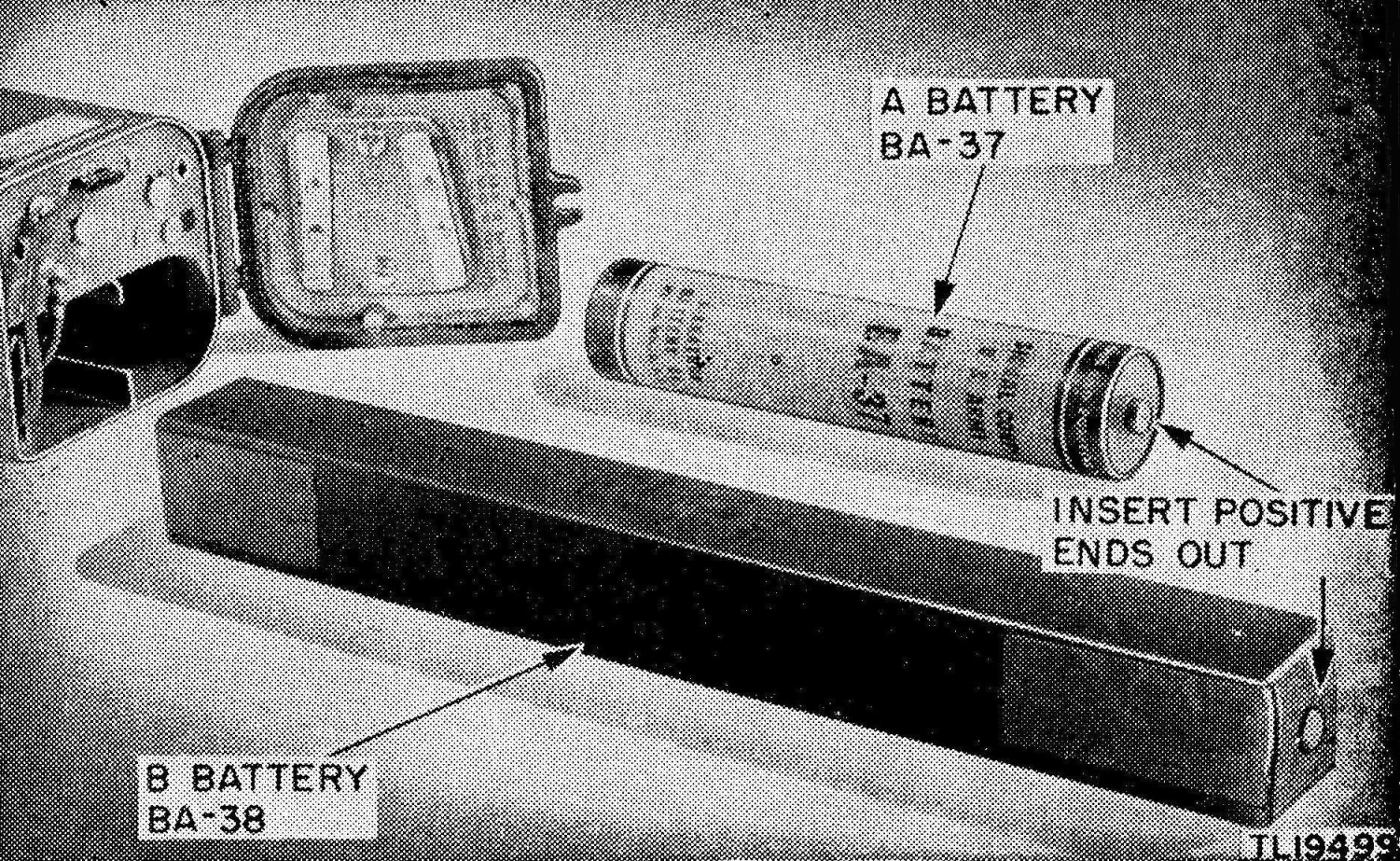
Two long batteries take up half the capacity of the BC-611
Operating the SCR-536 was very simple: just unscrew the protective cap of the antenna, pull out the antenna itself, and the device began to work. To finish the job, do everything in reverse order. To speak, you had to press a button on the body and release it to listen. There was no switch on the case, and there was no volume control either. Due to the ease of operation with one hand, the device was nicknamed “handie-talkie”.
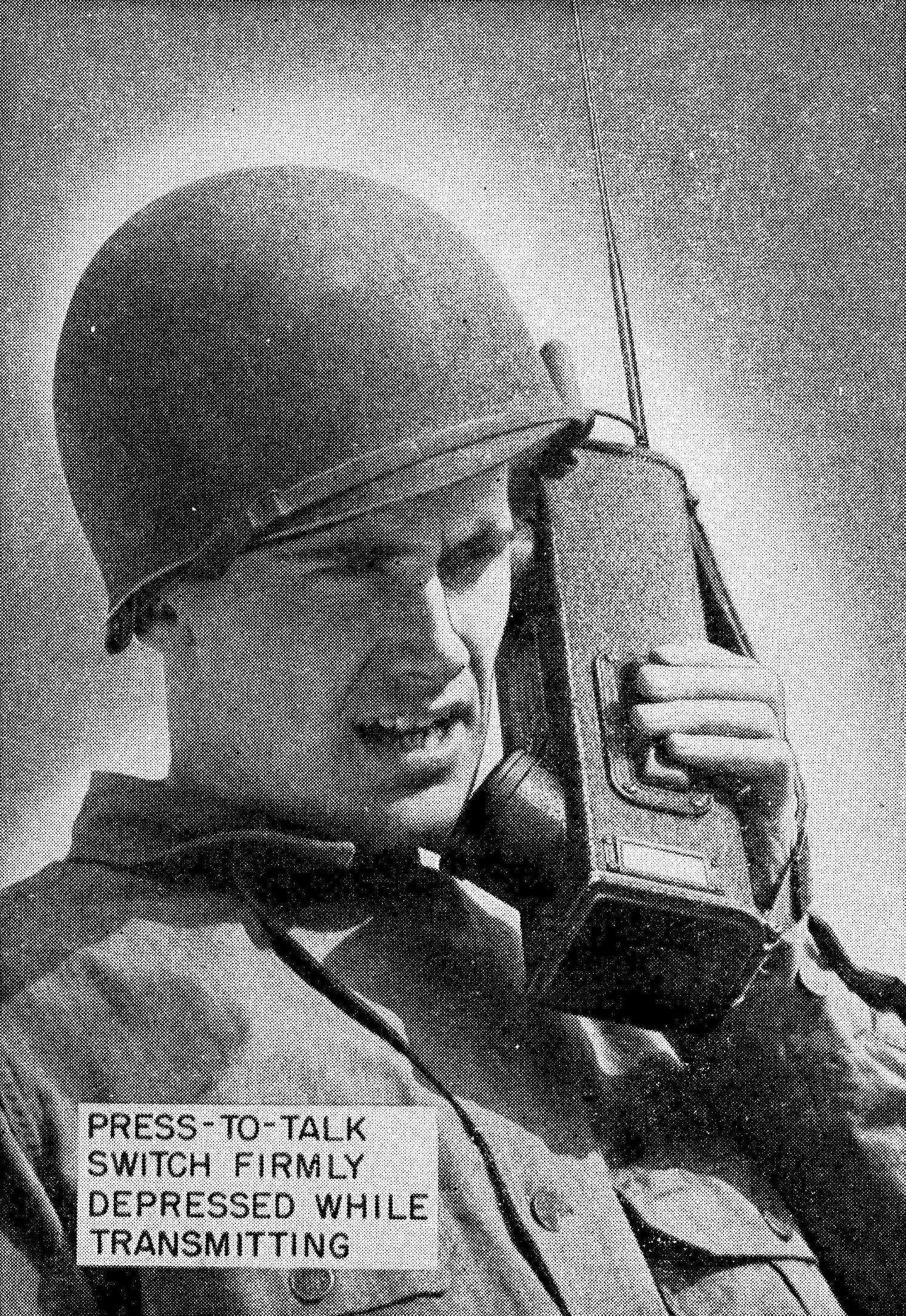
To talk, you need to keep the button pressed
The radio station had several modifications, which were designated by the letters A, B, C, D, E, F and contained slight differences in the circuits. Only the later F series models stood out noticeably in appearance: the bottom cover was an inch thicker and had additional connectors for a “headset” – headphones and a microphone. They made it possible not to remove the walkie-talkie from your shoulder at all, or to carry it freely, and not keep it endlessly near your head – a kind of hands-free of those times.
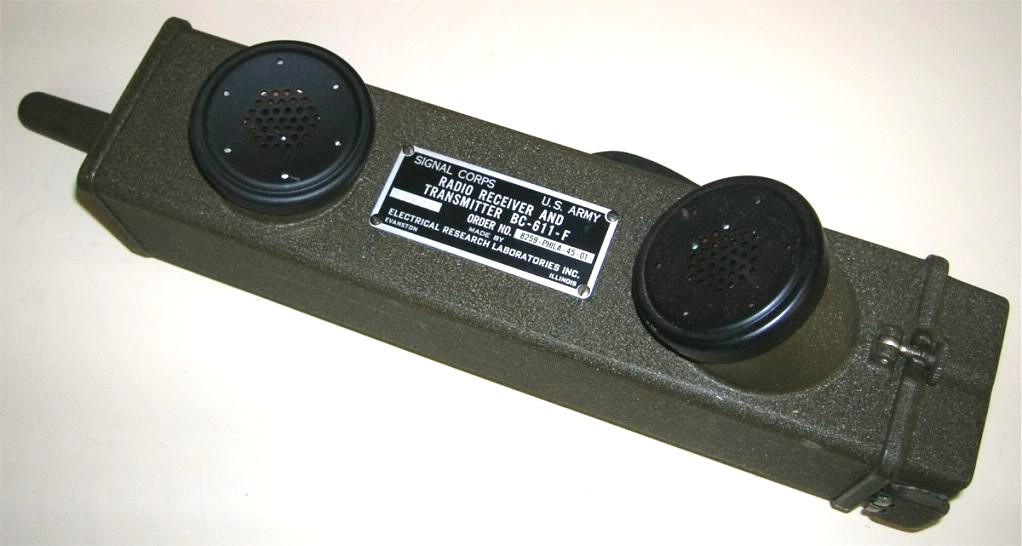
The bottom cover of the F series radio contains additional headphone and microphone jacks.
SCR-536 Kit:
- transceiver BC-611 (without batteries);
- instruction TM 11-235;
- batteries: BA-38 (103.5 V) and BA-37 (1.5 V);
- battery adapters: FT 501 and 50 CAL;
- protective case for microphone M-367;
- headphones HS-30, microphone T-45 and laryngophone T-30 (for the BC-611-F series);
- direction finding antenna MC-619;
- parts box BX-49;
- spare set of radio tubes GK-174;
- spare set of quartz resonators (for BC-611-A series).
BC-611 Specifications:
- size: 400×137×92 mm;
- weight (with/without batteries): 2.3/1.7 kg;
- antenna length: 945 mm;
- power: two batteries (1 BA-38 and 1 BA-37);
- modulation/frequency: AM/3.5–6.0 MHz;
- channel spacing: 40 kHz;
- transmitter power 360 mW;
- sensitivity: from 3 to 5 µV;
- range of action: up to 1.6 km above the ground and up to 4.8 km over the ocean;
- operation on one battery charge: 12–15 hours
Pros and cons
Lightweight and compact, the SCR-536 radio provided unprecedented mobility. The soldier was not tied to wires, he did not need to carry or carry heavy bulky equipment or be in the vicinity of a fixed radio station. The second hand was free for weapons, and the back was free for equipment. The device allowed small units and individual soldiers to be in constant contact when they would otherwise have to rely on wired communications or couriers.

Of course, handie-talkie had its drawbacks. In good weather conditions, in the line of sight, the radio usually worked well. But bad weather, dense vegetation, terrain, tall buildings and other factors often limited work and degraded communication quality. In heavy rain, the connection would malfunction, or even stop working altogether. And in the jungle, with constant high humidity and tropical downpours, corrosion could kill the radio in just a month.
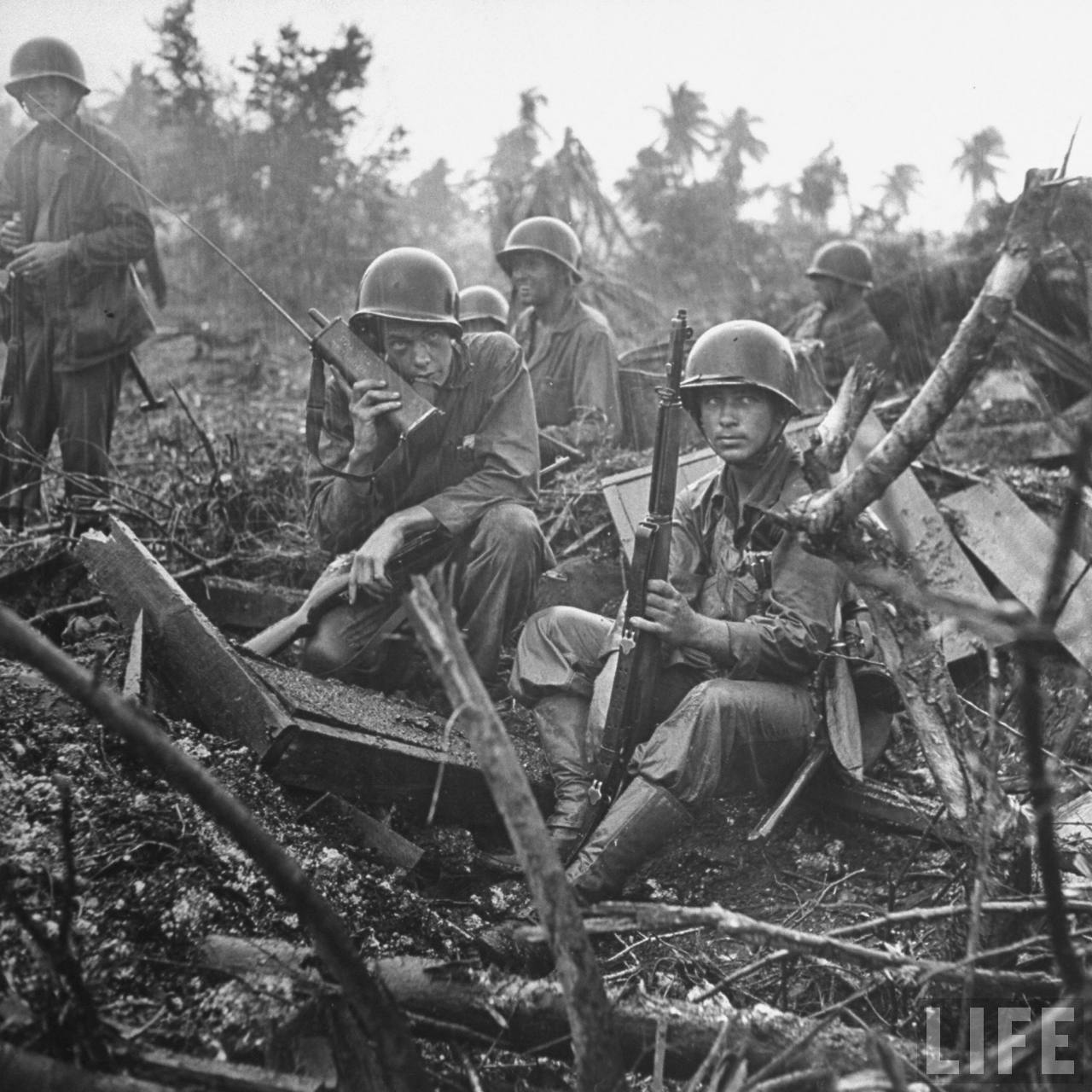
Guam, 1944. Tropical downpours could severely damage the radio, up to complete failure
A fully extended antenna could easily break, and an even shiny antenna could be noticed by an enemy even from afar (that’s why it was advised to camouflage it, for example, by painting it in dark colors).
However, despite its shortcomings, the SCR-536 became one of the symbols of World War II and the US Army. Due to its simplicity and effectiveness, it continued to be used in military operations, for example in Korea and Israel. But in the USSR such radios were not in use. Judging by the documents, only 20 sets of SCR-536 were delivered to the Lend-Lease Union.
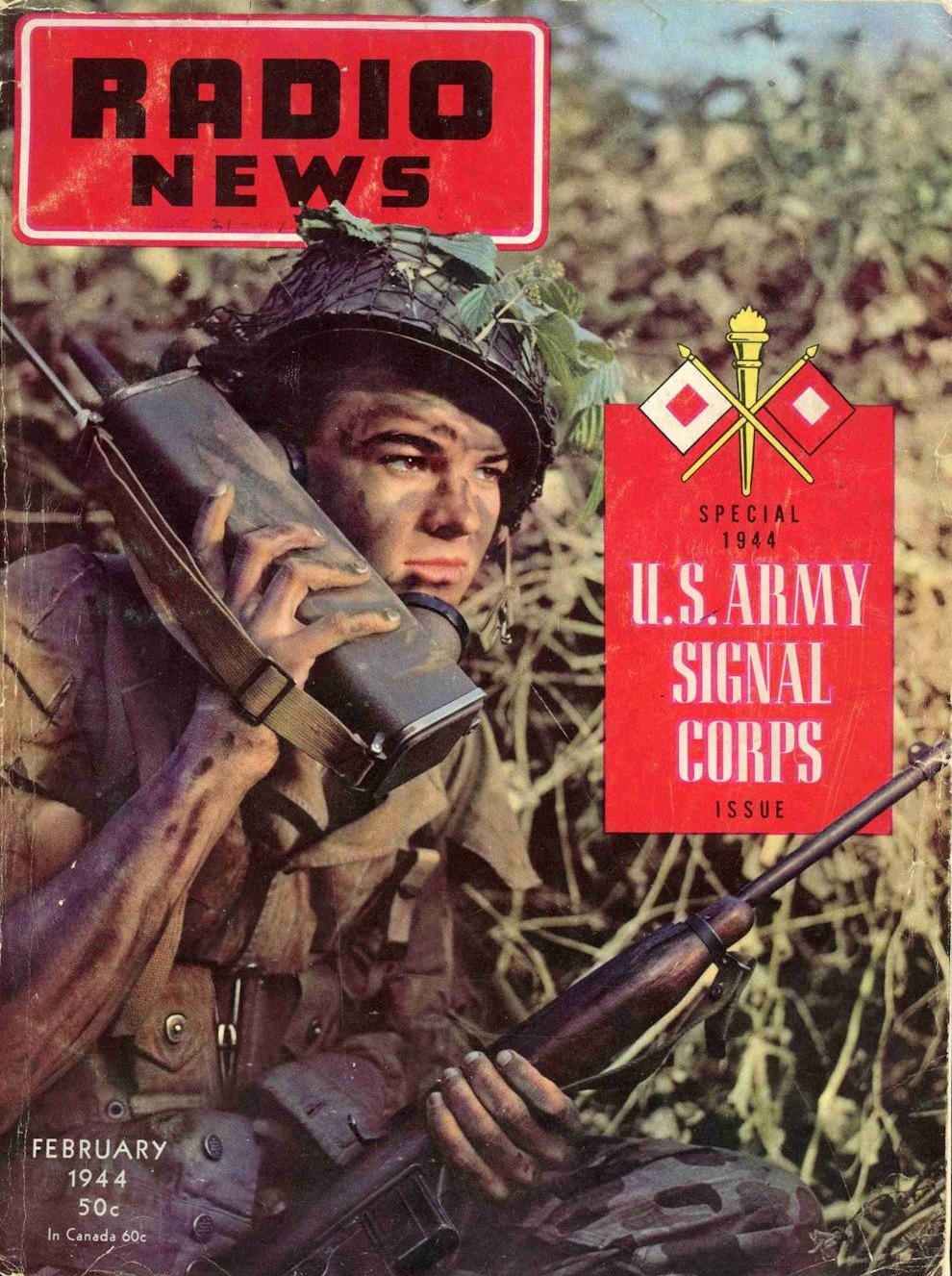
SCR-536 was a frequent guest in popular magazines
Walker and Talker
Motorola was one of the first to produce the well-known walkie-talkie pocket radios. SCR-536 played an important role in their creation and popularity. However, the very first “walkie-talkie” could only be called compact in part. It was a Galvin SCR-300 shoulder radio. It weighed from 14.5 to 17.3 kg (depending on the battery), range of up to 4.83 km, frequency range 40–48 MHz, modulation – frequency (FM), 41 channels. The conversation was conducted over a telephone receiver. Half of the volume of the radio was occupied by a BA-70 battery, or a slightly smaller BA-80.
The SCR-300 was developed in 1940, but began to be used only in 1943. Despite its rather large size and weight, it was considered quite compact and not too heavy. The soldier could easily carry the radio on himself. This particular radio station was called “walkie-talkie”. Over time, the name was transferred to SCR-536, displacing “handie-talkie”, and after the war – to other similar radios, including pocket ones. And looking at a modern small walkie-talkie, it’s hard to imagine that the first walkie-talkie could not be put into any pocket.
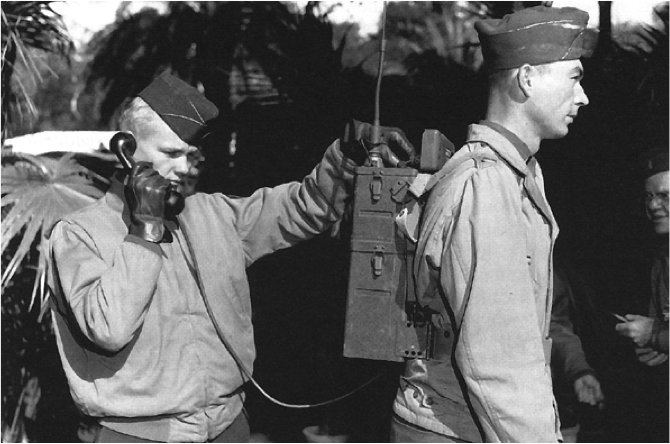
The first walkie-talkie looked like this
It’s not time to rest yet
After the war, Galvin Manufacturing changed its name to the popular Motorola Inc. In its products, it continued to rely on compactness and mobility, in particular on wireless communications: transistor radios and walkie-talkies, car radios, repeaters for spacecraft…
SCR-536 also did not lie idle. The fact is that before the war, Americans could not freely use radio communications – for this they had to obtain a special federal license. Therefore, after the war, the US Federal Communications Commission established a spectrum for civilians and small businesses. Radio communications now required only a simple license. True, bureaucrats from the Federal Commission spent four whole years developing rules for the civilian radio spectrum and arguing about how important such frequencies were. By 1952, only 1,401 people held a civilian license, and most of them used Handy Talks with altered frequencies.
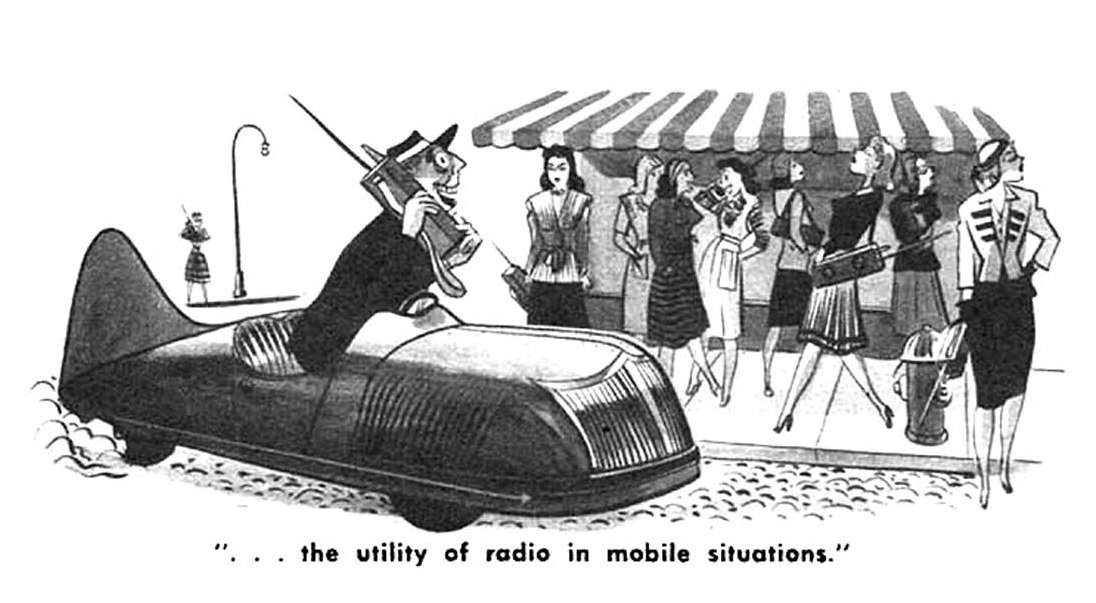
While officials were thinking, artists were predicting the future
The radio has been actively used for many years by both individuals and various services and enterprises. Over time, the necessary batteries fell out of use, and the SCR-536 boom faded. In addition, many light, compact and much more functional walkie-talkies have appeared, and the handie-talkie has become morally and physically outdated.
These days, the SCR-536 is popular with collectors and reenactors. The radio is used in battle reconstructions – both real radios from the war and modern copies. Enthusiasts try to use as many “original” parts as possible when restoring radios. Fortunately, detailed instructions with all the diagrams can be easily purchased or downloaded (https://archive.org/details/Tm11-235). And if it is not very difficult to purchase or even make the case itself, then there are more problems with the “filling”. Therefore, a modern walkie-talkie is often simply placed inside the case.
But the main problem for reenactors is batteries. Neither the BA-38 nor the BA-37 have been in production for a long time, and enthusiasts are experimenting with modern batteries. For example, a replacement BA-38 can be made from 10 Krona batteries. Another option: four large D-type batteries (a modern analogue of the BA-30 battery) and a special inverter adapter. So, apparently, it’s too early for handie-talkie to retire.
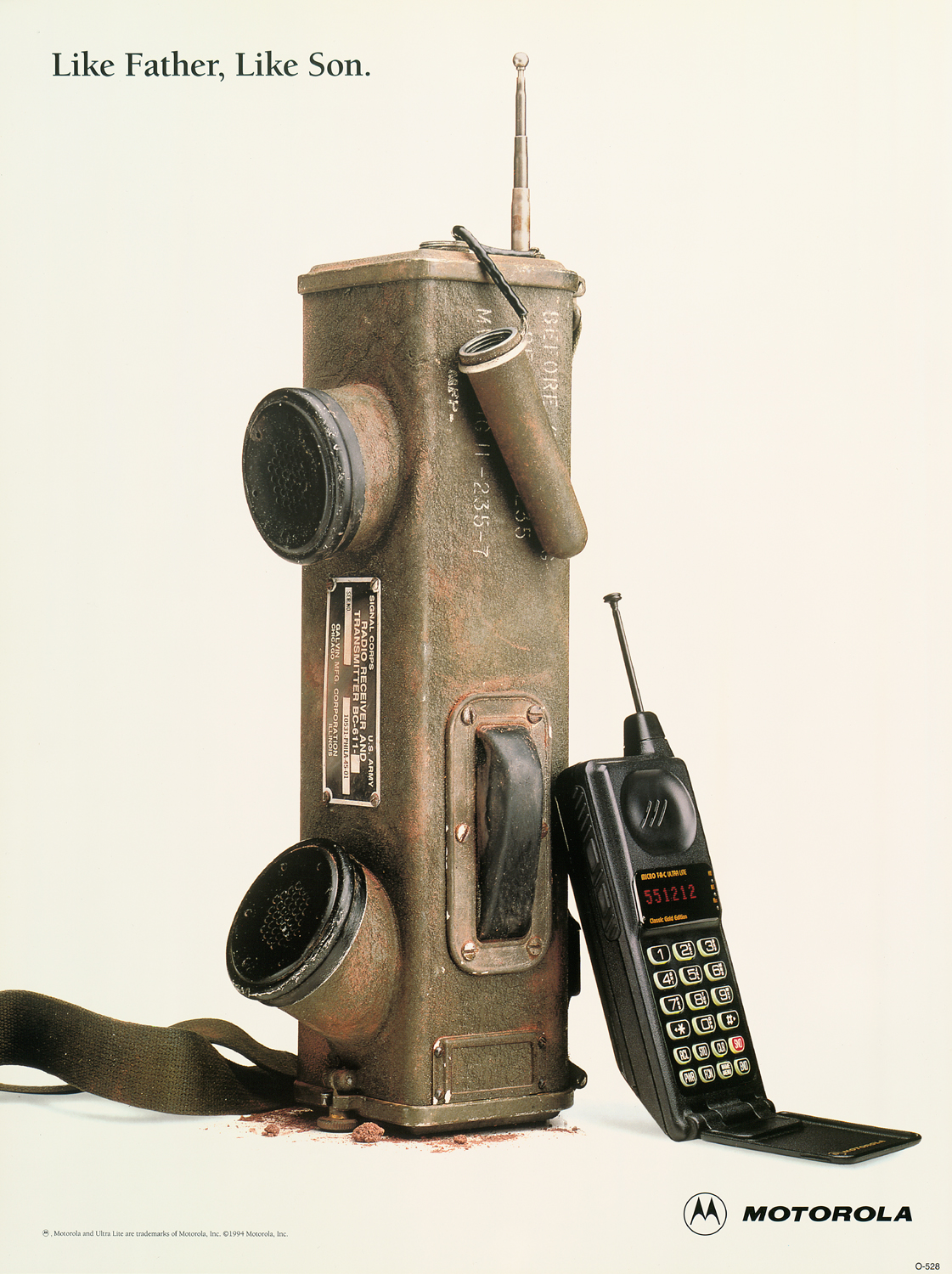
Fathers and sons: SCR-536 radio and MicroTAC 9800x mobile phone
In 1973, the world’s first mobile phone call was made. And in 1983, the Motorola DynaTAC 8000x phone went on sale. The first mobile “brick” was not much smaller than a military radio. With each new model, phones became slimmer and prettier, turning into elegant accessories. However, the “veteran” was not forgotten. In 1994, an advertisement for the new MicroTAC 9800x phone featured a stark metal walkie-talkie covered in rusty dust next to a stylish plastic flip phone. As if to show that without it, there might not have been any mobile communications.

Don't miss interesting news
Subscribe to our channels and read announcements of high-tech news, tes






Samsung Galaxy Fold7: not a smartphone, not a tablet, something more
 0
0 
Samsung Galaxy Fold series of smartphones is notable for its folding design and large display. The new generation model had an even larger screen, advanced cameras, stronger hardware and improved ergonomics.
NVIDIA Blackwell – architecture with new capabilities for AI and content creation
0 
NVIDIA technologies that were previously only available to owners of professional graphics cards are now open to ordinary users. Let’s talk about the capabilities of the Blackwell architecture in the field of artificial intelligence and content creation.
Garmin Instinct Crossover – hybrid smartwatch costs $600 with AMOLED screen, flashlight and sapphire glass smart watches

Garmin Instinct Crossover has a 1.2-inch AMOLED display with RevoDrive analog hands covered with Super-LumiNova luminescent compound.
New EcoFlow with 288 Wh capacity weigh less than 3 kilograms accumulator
EcoFlow has introduced a new line of portable charging stations in Europe, the Trail series. This device has already been on sale in the US